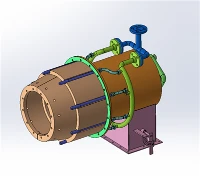
Jufeng Thermal Technology has independently developed the GeneralFlame biomass gasification system. This advanced technology converts various biomass raw materials – such as bamboo and wood leftovers, stalks, fruit shells, sorghum rods, and other agricultural residues – into high-quality combustible gas.

How It Works
After simple crushing, the biomass is fed into the gasifier. With the help of a gasification medium (air, oxygen, or steam), the material undergoes pyrolysis, oxidation, and reduction reactions. The associated tar is further cracked into small-molecule hydrocarbons through thermal or catalytic cracking. The final output is a clean syngas rich in CO (carbon monoxide), H₂ (hydrogen), and CH₄ (methane) – all directly usable for combustion.

Considering cost-effectiveness and environmental protection, GeneralFlame biomass gasification gas offers a mature business model and attractive investment returns.
Key Advantages
1. Clean & environmentally friendly
The system ensures emissions meet strict standards, making it an eco-friendly energy solution.
2. Large-scale production
The technology supports continuous, industrial-scale gas production suitable for factories, power plants, and district heating.
3. Low cost & multi-feedstock flexibility
The equipment works with a wide range of biomass raw materials, reducing fuel costs and supply risks.
4. High degree of automation
The system uses a PLC + configuration control system to automatically manage feeding, gas production, slag discharge, and gasification temperature. This enables long-term, stable, continuous production with minimal manpower.

Conclusion
GeneralFlame biomass gasification technology turns waste biomass into valuable syngas – clean, efficient, and economically viable. It is an ideal solution for renewable energy projects seeking low operating costs and high automation.