


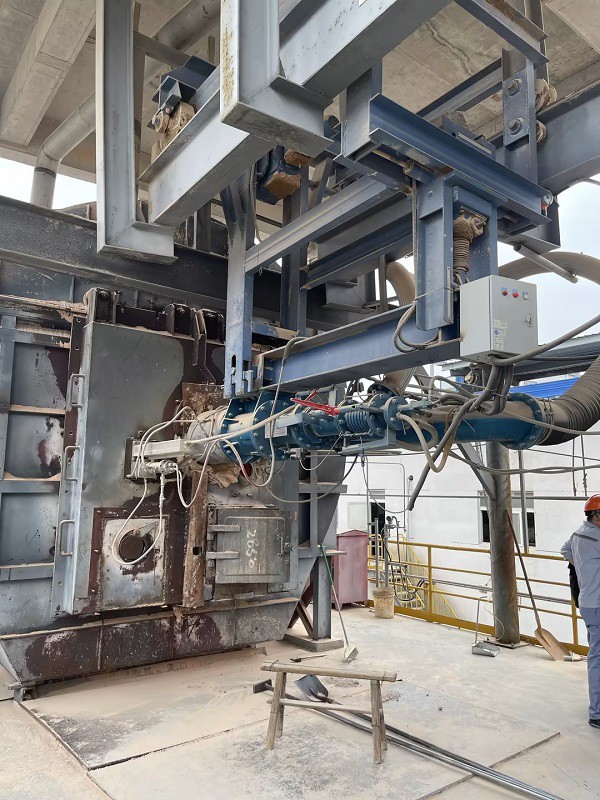
Generalflame does more than design and manufacturing. Bring together the disparate experts in various aspects and combine the long-term accumulated industry experience, we offer the world-class construction and installation expertise services. We closely follows the development trend of combustion engineering construction, and embodies the advantages of high-quality talents in production design and delivery after sales. We provide total coverage, concept to completion. Thanks to our more professional and experienced team, Generalflame maximize the engineering design to meet our customers' expectations from initial consultations through design and fabrication and on-site installation and calibration, making the project run smoothly.
Our comprehensive services include:
- Individualized System Design
- Product design and manufacturing
- Equipment selection and supporting products
- Custom-designed control panels
- Transportation and packaging
- Equipment installation
- Systems Integration
- Construction management
- Safety management
- Quality management
- Commissioning and training
- Trouble-shooting
- After-sales service

In the construction of combustion engineering, we communicate with customers in a timely manner to circumvent any potential problems. Cooperate with Jufeng, you will have both intimate and high-quality satisfactory partners, so you can minimize the number of participants in your project and streamline your efforts.
Our work
Low Nox burner structure
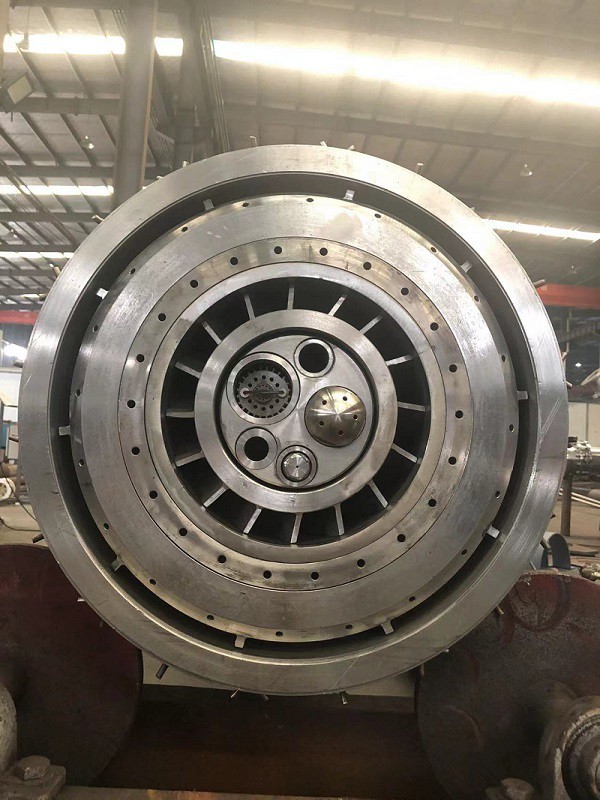
The burner is equipped with two-stage air supply: primary air and secondary air. The primary air is the swirling air (adjust the flame length and rigidity - accounting for 30% of the total air volume); the secondary air is direct current air (accounting for 70% of the total air volume).
Fuels are arranged with multiple spray guns. The spray guns are about 12-24pcs, divided into internal and external two stages of annular distribution. The injection holes are porous structure, reaching about 4-8 holes, so that the central temperature of the combustion flame can be reduced after the gas ejection.
C. Improve fuel residence time and temperature level in fuel enrichment zone
Increasing the residence time of the fuel gas in the fuel-rich region reduces the tendency of nitrogen oxides to form from the fuel gas.
D. Strong axial flow nozzle to sweep the secondary air
It replenishes excess air in time to ensure full burnout. By forming an anoxic zone during the initial stages of combustion minimizes the formation of N0x, but at the same time provides an appropriate amount of oxygen to maintain flame stability.
E. Flexible and adjustable nozzle with low resistance and high efficiency by CFD technology.
Using cross jet technology, low resistance and high pressure nozzles, low pressure honeycomb rotary-cutting nozzle, and combined with precision machining technology, solve the fuel burnout problems caused by fuel concentration, reduce the generation of NOX while also guarantee the process conditions of the reformer.
F.Flue gas furnace internal circulation technology
The burner body extends into the furnace 200mm, through the burner in the furnace after ejecting, forming a negative pressure area, mixed with a certain amount of flue gas in the furnace.
G. Flue gas furnace outside circulation technology
A hot flue gas is led from the chimney into the combustion air, which reduces the oxygen content of the combustion air, slows the combustion speed, controls the core temperature of the flame, and reduces the nitrogen oxide emission. (Rotary kiln and other process kilns are not suitable for this process)
H. Fuel stratified combustion is adopted
The central fuel uses oxygen-rich, oxygen-excess combustion to reduce the flame combustion temperature, and the outer layer is replenished with fuel, to mix with the low oxygen concentration of flue gas for poor oxygen combustion again.
ALVS patent Structure
|
Burner from A company: axial flow and radial flow are not adjustable |
Burner from B company: adopt rectangular adjustable structure, which requires large torque for adjustment and poor anti-interference ability of primary air |
||||
|
AVLS patent burner from GENERALFLAME: Laval adjustable nozzle, low torque required for adjustment, good adjustable performance and anti-interference ability |
|||||
|
Burner ALVS electric regulating mechanism (lever control,the direction of motion is opposite to that of the regulating cone) |
|||||

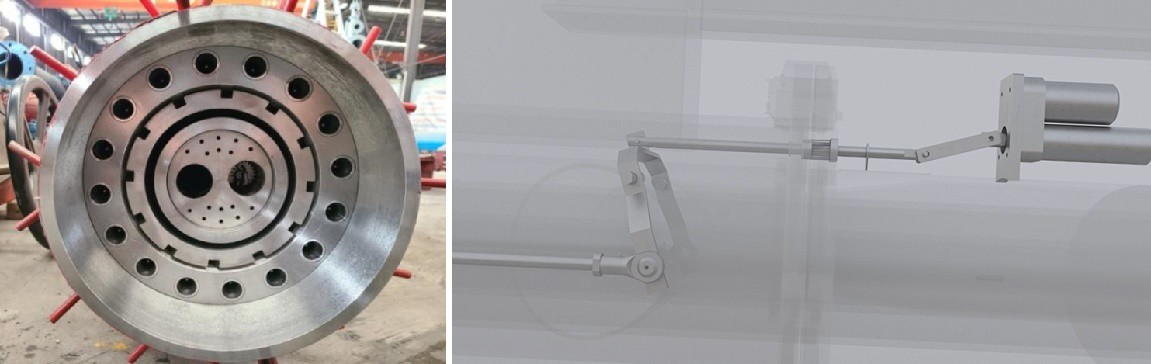
|
|
|
|
|||
|
|
|
|
|||
|
Front-place the regulating cone short flame state |
Middle-place the regulating cone middle flame state |
Back-place the regulating cone long flame state |


SNCR Denitration
Generalflame develops a complete low nitrogen removal path from low nitrogen combustion -SNCR -SCR, with mature and reliable development and service experience in industrial kilns such as boilers , rotary kilns, hot blast stoves and heating furnaces. It adopts CFD(Computational Fluid Dynamics) technology to optimize the fuel combustion process.Cooperating with school of dynamic education of Yangzhou University, we optimize and analyze the process of fuel combustion and flue gas generation in different kilns by CFD technology. Without major changes to the kiln body, we can modify the installation location of the sub-burner and adopt grading combustion; SNCR technology can greatly improve the fuel burnout efficiency and reduce co and NOX emissions.
There is no catalyst for SNCR, therefore, the denitration reduction reaction temperature is higher. When the denitration agent is ammonia, the reaction temperature range is 850~ 1100℃. when the flue gas temperature is higher than 1050℃, ammonia will start to be oxidized to NOx, when temperature reaches to 1100 t℃, the oxidation rate accelerates significantly, which reduces the denitration efficiency and increases the amount and cost of reductant. When the flue gas temperature below 870 ℃. the desulfurization denitration reaction rate greatly reduced.
Adopting the patent technology, we can directly install the reductant atomizing nozzle on the rotating cylinder of the rotary kiln (temperature zone as 850-1050℃), which will effectively solve the problem of increased investment of denitrification system and high operation cost, caused by no temperature zone on kiln systems for installation of reductant atomization nozzle. lt reduces the denitration investment and operation cost.