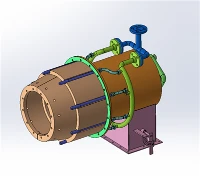
Low-NOx burner companies are emerging as core engines for industrial green transformation amidst the dual drivers of the "dual carbon" goals and industrial modernization. These companies specialize in developing and manufacturing high-efficiency combustion equipment that dramatically reduces nitrogen oxide (NOx) emissions. Through technological innovation, they strike a balance between industrial productivity and environmental protection, providing practical emission reduction solutions for energy-intensive sectors like steel, chemicals, and power generation. Their core value extends beyond meeting stringent environmental standards; they are pivotal in steering industrial production toward a more efficient, cleaner, and intelligent future.

How Low-NOx Burners Work: Controlling Pollution at the Source
- The fundamental design principle of low-NOx burners is to suppress the formation of NOx at its source by precisely controlling temperature, oxygen concentration, and mixing patterns during combustion. Traditional combustion at high temperatures (often exceeding 1500°C) fixes atmospheric nitrogen, generating significant NOx. Low-NOx technologies address this challenge through several key methods:
- Staged Combustion: Fuel and air are introduced in separate stages. A primary, oxygen-lean combustion zone lowers peak flame temperatures, followed by the introduction of remaining air to ensure complete combustion, effectively reducing thermal NOx.
- Flue Gas Recirculation (FGR): A portion of cooled flue gas is recirculated and mixed with fresh combustion air. This dilutes oxygen concentration and lowers combustion temperature, serving as a highly effective method for NOx reduction.
- Fuel Staging / Rich-Lean Combustion: By varying fuel concentration at different points, localized oxygen-deficient or fuel-rich zones are created to control temperature and minimize NOx formation.
Three Core Advantages: Environmental, Economic, and Versatile
1.Significant Environmental Benefits: Low-NOx burners can reduce NOx emissions by over 80%. For instance, after retrofitting a steel plant's heating furnace, NOx emissions dropped from 300 mg/m³ to below 50 mg/m³, far exceeding national ultra-low emission standards (typically 200 mg/m³). Widespread adoption significantly improves regional air quality.
2.Tangible Energy Efficiency Gains: Advanced low-NOx combustion technology, by optimizing air-fuel ratios and mixing, typically improves thermal efficiency by 5%-10%. In applications like glass melting furnaces, it can achieve up to 15% fuel savings while maintaining process quality, directly lowering operational costs.
3.Strong Operational Adaptability: Low-NOx burners are compatible with various fuels (natural gas, diesel, pulverized coal, biomass, etc.) and are widely used in industrial boilers, heaters, melting furnaces, and gas turbines. Their modular and customizable designs meet the specific safety and process requirements of diverse industries like chemicals, ceramics, and food processing.

Key Considerations for Selecting a Low-NOx Burner
Businesses should conduct a comprehensive evaluation to ensure the best return on investment:
- Matching the Technology: Choose the appropriate technology based on fuel type and existing furnace/boiler design. FGR is common for large utility boilers, while staged combustion may be more suitable for small and medium-sized industrial furnaces.
- Operating Costs & Reliability: Consider ignition stability, turndown ratio, maintenance frequency, and service life. High-quality products using high-temperature resistant materials and intelligent control systems ensure long-term stable operation and lower lifecycle costs.
- Compliance & Future-Proofing: Ensure the equipment meets current and foreseeable local and national environmental standards. Selecting a supplier with strong R&D capabilities helps avoid the risk and cost of premature retrofitting due to evolving regulations.
Future Trends: Integration of Intelligence and Ultra-Low Emissions
Aligning with Industry 4.0 and "dual carbon" goals, low-NOx burners are evolving toward intelligence and system integration:
- Smart Operation & Maintenance: Integrated with IoT sensors and AI algorithms, they enable real-time monitoring, automatic parameter optimization, remote diagnostics, predictive alerts, and energy management.
- Ultra-Low Emission Technologies: Combining with cutting-edge technologies like catalytic combustion pushes NOx emissions toward "near-zero" levels (below 10 mg/m³).
- System Solutions: Leading companies now offer comprehensive energy-saving and emission-reduction services covering audit, retrofit, operation, and monitoring, rather than just selling standalone equipment.