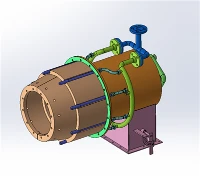
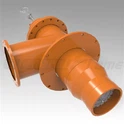
A High-Velocity Burner (often called a high-velocity nozzle) is a specialized combustion device designed not only for efficient fuel combustion but, more importantly, to generate a high-temperature, high-speed jet stream (typically reaching speeds of 100-300 m/s or higher). This powerful jet is widely used to enhance heat transfer, agitate furnace atmospheres, and create specific flow fields, making it a key component for upgrading modern industrial furnaces.

I. Core Working Principle & Innovative Design
Unlike traditional burners that focus on stable flame shape, high-velocity burners employ a unique design philosophy based on the "separation of combustion and kinetic energy transfer."
1. Stage 1: High-Efficiency Combustion Zone
Fuel and air achieve rapid, uniform mixing and intense combustion within a compact chamber via strong swirl or premixing technology. This combustion chamber features an extremely high heat release rate and is constructed from high-temperature resistant materials like ceramics or special alloys.
2. Stage 2: Kinetic Energy Transfer Zone (Mixing/Expansion Chamber)
The resulting hot combustion gases enter a mixing tube or expansion chamber. Here, "tempering air" can be introduced to precisely control the final outlet gas temperature and flow rate. The geometry of this zone (e.g., a Laval nozzle structure or straight pipe) efficiently converts the thermal and pressure energy of the gas into kinetic energy.
3. Outlet: High-Speed Jet
Finally, a stream of uniform-temperature, very high-velocity gas is ejected from the nozzle, forming a high-speed flame (high-temperature jet). Many designs leverage the jet's entrainment effect to automatically recirculate furnace flue gases, effectively lowering peak flame temperature.
II. Key Technical Features & Prominent Advantages
- Exceptionally High Heat Transfer Efficiency: The high-speed gas stream directly impacts the workpiece, disrupting the surface boundary layer. This results in a convective heat transfer coefficient several times to an order of magnitude greater than traditional radiant heat transfer, significantly reducing heating times.
- Superior Furnace Temperature Uniformity: The high-speed jet vigorously stirs the furnace atmosphere, ensuring highly uniform temperature distribution and atmosphere composition, eliminating local hot or cold spots.
- Compact Structure: The high combustion intensity allows for a much smaller physical size compared to traditional burners of equivalent power.
- Flexible Control: The temperature and velocity of the outlet stream can be easily adjusted by modulating fuel, primary air, and secondary (tempering) air flows.
- Low Nitrogen Oxide (NOx) Emissions: Flue gas recirculation and the creation of a uniform temperature field effectively suppress the formation of thermal NOx, offering superior environmental performance.
III. Primary Application Fields
The core value of high-velocity burners lies in "using gas flow instead of a static flame" for efficient heating and agitation. They are widely used in:
- Heat Treatment Industrial Furnaces: Applications requiring rapid, uniform heating such as metal strip annealing lines, aluminum aging furnaces, and steel quenching/tempering furnaces.
- Chemical & Materials Processing: Spray drying towers, fluidized beds, rotary kilns, and air knives in steel galvanizing/aluminizing lines.
- Food & Textile Industries: Large-scale food drying lines and non-woven fabric hot-air bonding production lines.
- Waste Gas & Liquid Incineration: Scenarios requiring intense turbulent mixing to ensure complete destruction of harmful substances.
- Research & Testing: Equipment requiring high-enthalpy, high-speed gas streams, such as wind tunnel heaters.
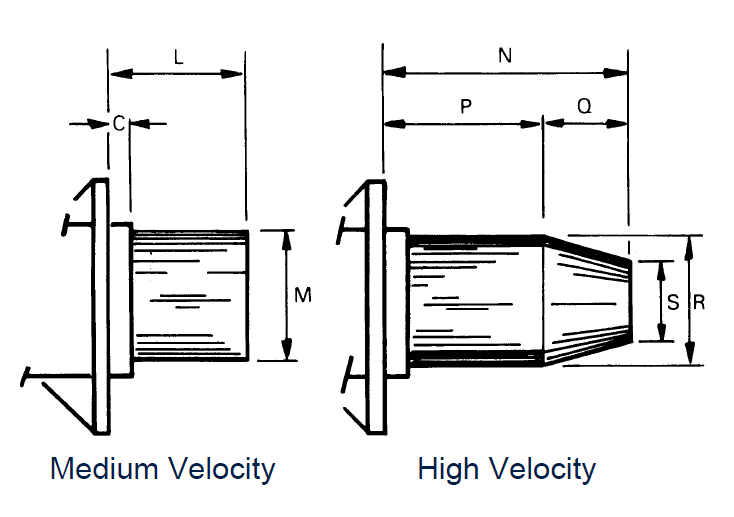
Summary
Through its unique staged design, the high-velocity burner perfectly integrates efficient combustion with kinetic energy output, solving the common pain points of low heat transfer efficiency and poor temperature uniformity found in traditional heating methods. Its combined advantages in improving product quality, saving energy, and reducing emissions make it a critical technology for innovation across numerous industrial heating sectors.