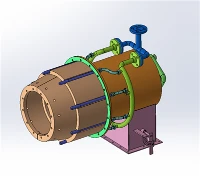
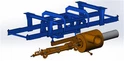
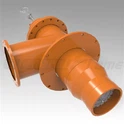
The fuel hot blast stove has many varieties and series. It is divided into high temperature furnace and medium temperature furnace according to the output air temperature. It is divided into indirect fuel hot blast stove and direct fuel hot blast stove in the form of transportation. It is divided into combined fuel hot air in the form of heat exchanger. Furnace and split fuel hot blast stove.
1. Direct high-purification fuel hot air stove
It is the direct combustion of the fuel, the high-purification treatment to form the hot air, and the material is directly contacted by heating, drying or baking. This method consumes about half as much fuel as steam or other indirect heaters. Therefore, direct high-purification hot air can be used without affecting the quality of the dried product.
The fuel is a liquid fuel such as diesel oil or heavy oil.
The high-temperature combustion gas obtained by the combustion reaction of the fuel is further contacted with the outside air, and after being mixed to a certain temperature, directly enters the drying chamber or the baking room, contacts the material to be dried, and heats and evaporates the water to obtain a dried product. In order to utilize the combustion reaction heat of these fuels, a fuel combustion device must be added. Such as: fuel burners, etc.
2. Indirect fuel hot air stove
It is mainly suitable for the dry materials not allowed to be contaminated, or applied to the drying of heat-sensitive materials with lower temperature. Such as: milk powder, pharmaceuticals, synthetic resins, fine chemicals, etc. Such a heating device uses steam, heat transfer oil, flue gas or the like as a carrier to heat the air through various forms of heat exchangers.
The most essential problem with indirect hot blast stoves is heat exchange. The larger the heat exchange area, the higher the heat conversion rate, the better the energy saving effect of the hot blast stove, and the longer the life of the furnace body and the heat exchanger. Conversely, the size of the heat exchange area can also be identified from the temperature of the flue gas. The lower the temperature of the smoke, the higher the heat transfer rate and the larger the heat exchange area.